


Why Everyone Wants a Ritual Now: The Meaning Behind Modern Rituals
Why Everyone Wants a Ritual Now: The Meaning Behind Modern Rituals
Why everyone wants a ritual now comes down to a very human need: we want comfort, shape and a little emotional steadiness when life feels noisy. Rituals are not about being dramatic or deeply mystical. Most of the time, they are simply repeated actions that help us feel anchored. A cup of tea before a difficult conversation, a tidy desk before work, a candle lit at bedtime — these small acts can quietly restore a sense of self.
Voice search answer: People want rituals now because they create meaning, comfort and control during uncertain times. A ritual is different from a routine because it carries emotional or symbolic value, not just practical function.
Why Rituals Feel Bigger Right Now
It is not hard to see why rituals have become more appealing. Modern life can feel fragmented: messages arrive constantly, plans change without warning, and many people are still living with the after-effects of the pandemic, burnout and general overstimulation. In that sort of climate, ritual offers a small but genuine relief.
Unlike grand ceremonies, modern rituals are often modest. They are the things we do every day to tell ourselves, right, this moment has shape. That matters. Humans are meaning-making creatures. When the world feels uncertain, we reach for symbols, rhythm and repetition.
There is also something reassuring about ritual being chosen rather than imposed. A personal ritual is yours. It is not about productivity for productivity’s sake. It is about making space for feeling, focus or connection.
Ritual vs Routine: What’s the Difference?
This is where people often get muddled. A routine is practical. A ritual is practical too, but it carries meaning.
- Routine: brushing your teeth, replying to emails, making the school run.
- Ritual: the same cup of coffee every morning while you sit by the window for five quiet minutes.
- Habit: something repeated often, sometimes without much thought.
The distinction is subtle, but important. A ritualized behaviour becomes meaningful because you bring attention to it. The action itself may be simple. The difference lies in presence. A routine gets the job done. A ritual helps you feel something while the job is being done.
The Psychology Behind Rituals
There is a practical reason rituals feel soothing: repetition can calm the mind. When life feels uncertain, familiar actions offer a sense of predictability. That does not mean a ritual solves everything, but it can reduce the feeling of being scattered.
Rituals can also help with emotional regulation. People often use them to mark transitions — waking up, starting work, coming home, going to bed, ending a relationship, beginning a new chapter. These moments can be awkward or tender, and a small symbolic act gives them shape.
Think of it like this: if your mind is a room full of open drawers, a ritual is one of the neat little hands that shuts a few of them. Not all. Just enough.
How Uncertainty Makes Rituals More Appealing
The more uncertain life feels, the more attractive rituals become. That is true in love, work, health and identity. When the future feels blurry, people look for anchors they can trust. A ritual is one of the simplest anchors available.
That is part of why rituals are showing up everywhere: in morning routines, dating advice, team meetings, self-care culture and even grief support. We are not just trying to be more efficient. We are trying to feel held.
In astrology, this makes sense too. When people are unsure, they often turn towards symbols, timing and personal meaning. It is not always about prediction; sometimes it is about perspective. A ritual can become a way of saying, I am here, I am paying attention, and I am moving through this with intention.
Everyday Rituals People Are Turning To
Rituals do not need to be elaborate to be effective. In fact, the smaller they are, the more likely people are to keep them.
- A morning coffee or tea without checking the phone first
- A five-minute tidy before leaving the house
- Writing three lines in a journal at the end of the day
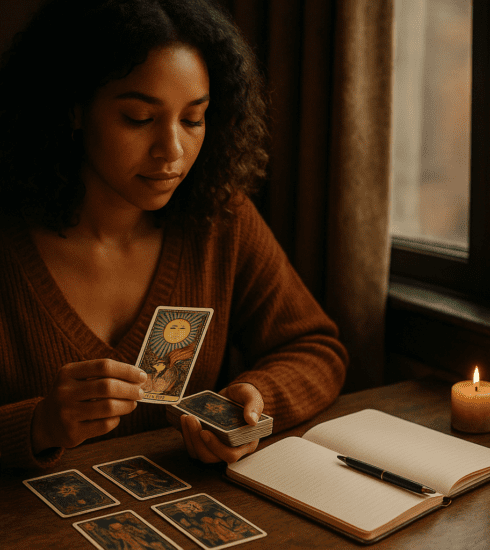
- Lighting a candle before a tarot reading or meditation
- Putting on a favourite scent before a date or big meeting
- A bedtime routine that signals the day is over
- Calling one friend every Sunday without fail
These are the sorts of micro-rituals that help life feel less mechanical. They are not magical fixes, but they can be emotionally intelligent ones.
Why Wellness Culture Talks About Rituals So Much
Wellness culture loves the word ritual because it sounds more meaningful than routine. And to be fair, sometimes that is exactly the point. Brands and magazines use the language of ritual because people want more than a checklist. They want experience, atmosphere and a sense of care.
Still, it is worth keeping one foot on the ground. A ritual does not need crystals, incense or a £40 candle to count. If a simple action helps you feel steadier, that is enough. The magic is often in the intention, not the packaging.
When Rituals Help — and When They Don’t
Rituals are most useful when they are flexible, comforting and realistic. They can support calm, help with transitions and make ordinary moments feel more intentional.
But rituals can become unhelpful if they turn rigid, superstitious or stressful. If a practice starts feeling like a rule you are afraid to break, it may be worth loosening your grip. The aim is support, not pressure.
A healthy ritual should leave you feeling more like yourself, not less. If it becomes another thing to perform perfectly, it has probably wandered off course.
The Bottom Line: Rituals as Meaning in a Chaotic World
So why everyone wants a ritual now, in the plainest sense? Because rituals help us make meaning in a world that often feels too fast, too fragmented and too loud. They offer rhythm where life feels scattered, and presence where life can feel automatic.
That is why rituals keep showing up in daily life, in wellness, in love and even in the way people begin and end their days. They remind us that ordinary moments can hold emotional weight.
If you would like to create your own ritual, keep it simple. Make it repeatable. Make it personal. And make sure it gives something back — calm, clarity, connection, or simply a brief and welcome pause.
Need a more personal answer? For guidance shaped around your own question, you can speak with one of Philip Garcia’s trusted psychic readers. Click on this link or call 0203 472 4377
Disclaimer: Psychic and astrological content is provided for entertainment and personal insight. It should not replace professional medical, legal, financial or mental health advice.
Frequently Asked Questions
Why are rituals becoming more popular now?
Rituals are becoming more popular because they offer comfort, structure and meaning during uncertain, overstimulated times.
What is the difference between a ritual and a routine?
A routine is mainly practical, while a ritual is a repeated action that also carries emotional or symbolic meaning.
Do rituals actually help?
They can help people feel calmer, more grounded and more present, especially when used in a flexible and realistic way.
Can a ritual be very simple?
Yes. A ritual can be as simple as making tea mindfully, journalling for five minutes or pausing before bed.
For guidance shaped around your own question, you can speak with one of Philip Garcia’s trusted psychic readers. Click on this link or call 0203 472 4377
Psychic and astrological content is provided for entertainment and personal insight. It should not replace professional medical, legal, financial or mental health advice.