
Why Everyone Wants a Ritual Now: The Meaning Behind the Modern Ritual Trend
Why Everyone Wants a Ritual Now: The Meaning Behind the Modern Ritual Trend
If it feels as though everyone has suddenly developed a ceremonial relationship with their coffee, candle, bath salts or moon phase, you are not imagining it. Why Everyone Wants a Ritual Now is one of the more revealing questions of the moment, because it says rather a lot about how people are coping with modern life.
Quick answer: rituals are popular now because they give people structure, meaning and a sense of calm in a world that often feels fragmented. Unlike a simple routine, a ritual carries intention. It helps mark a transition, steady the mind and make ordinary life feel more rooted.
That does not mean every ritual has to be spiritual, mystical or Instagram-ready. Sometimes it is as modest as lighting a candle before work, taking three slow breaths before a difficult conversation, or making tea in silence rather than while half-watching messages pile up on your phone. Small things can be surprisingly powerful when they are done with attention.
What “ritual” means in 2026
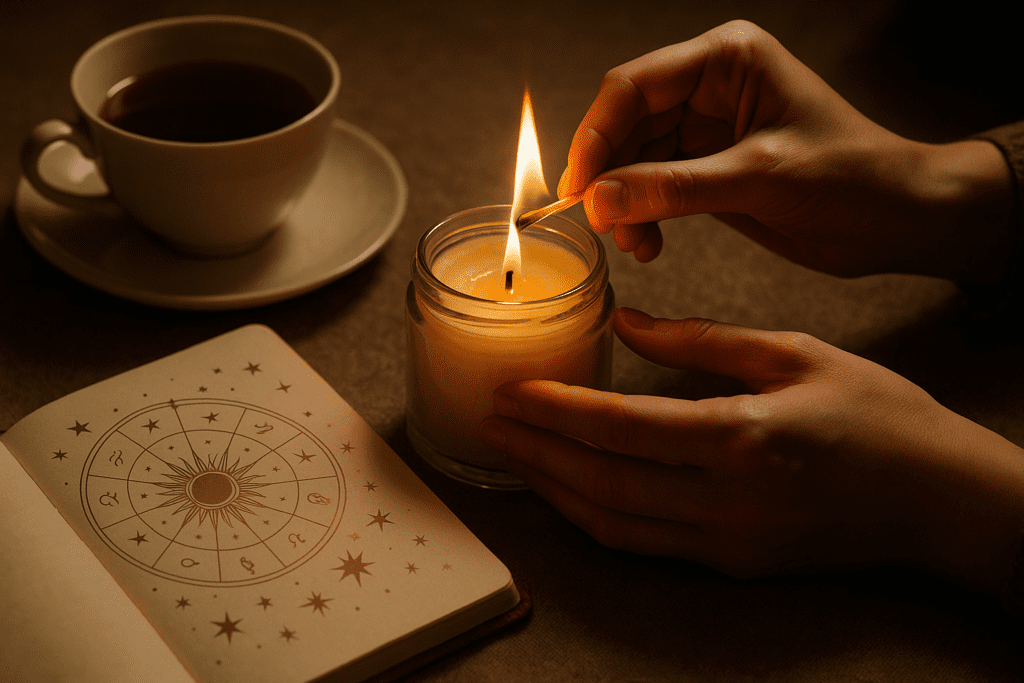
In everyday language, a ritual is simply a repeated act performed with purpose. It may be linked to spirituality, but it does not have to be. Modern rituals often sit somewhere between self-care, mindfulness and habit — which is why the phrase has become so flexible.
People now talk about a morning ritual, a self-care ritual, a wind-down ritual, or even a “Sunday reset”. The wording matters. A routine can feel mechanical; a ritual feels chosen. That tiny shift gives the act emotional shape.
Ritual vs routine vs habit
These words are often used interchangeably, but they are not quite the same.
- Habit: something you do often, sometimes without much thought.
- Routine: a regular sequence of tasks that keeps life running smoothly.
- Ritual: a repeated action done with intention, symbolism or emotional significance.
For example, brushing your teeth is a habit. Making coffee before school runs is a routine. Taking five calm minutes to sit, breathe and set an intention for the day can become a ritual. The action may look similar from the outside, but the inner experience is different.
Why rituals feel so appealing right now
The modern ritual trend is not really about decoration. It is about comfort, identity and control. Many people are tired, overstretched and mentally distracted. Life can feel noisy, whether that noise comes from work, family demands, constant notifications or simply too much to think about at once.
Rituals answer that unease in a gentle way. They create a beginning, middle and end. They help the nervous system recognise a shift. They tell the mind, “This moment matters.” And when life feels vague or rushed, that matters more than we sometimes admit.
There is also a cultural reason. After years of instability, change and general uncertainty, people are drawn towards things that feel steady. Rituals offer continuity. They say: even if the world is chaotic, I can still choose how I begin my day, how I greet my loved ones, or how I close the evening.
The psychology behind ritual
There is a very human reason rituals work. They reduce mental friction. When you repeat an action with intention, your brain starts to associate that action with a particular state: focus, calm, gratitude, confidence, or rest.
This is why a pre-meeting ritual can help you feel more composed, or why a bedtime ritual can make it easier to switch off. It is not magic in the theatrical sense. It is meaning-making in the practical sense. The emotional effect comes from the repetition, the attention and the symbolism.
In other words, rituals help us feel held by our own lives. That is no small thing.
Where rituals show up in daily life
Rituals are appearing everywhere, which is part of their charm. A few examples:
- Morning: stretching, journalling, a cup of tea without scrolling.
- Work: opening the laptop with intention, clearing the desk, setting one priority.
- Relationships: a check-in walk, a weekly meal, a phone-free evening.
- Grief and change: lighting a candle, visiting a place that matters, writing a note.
- Wellness: bathing, breathwork, tarot, meditation, or simply sitting quietly before the day begins.
None of these need to be elaborate. In fact, the best rituals are often the least fussy. The point is not to perform wellness; it is to create a small moment of presence.
The social media effect
Of course, social media has had a hand in the ritual trend. Creator culture has made rituals look polished, aesthetic and eminently shareable. A neat tray, a candle, a notebook and a few carefully chosen words can make an ordinary moment seem like a scene from a lifestyle advert.
There is nothing wrong with that, provided we remember the difference between something that looks soothing and something that actually is soothing. A ritual does not need to be visually perfect. It only needs to support you.
That is where a bit of honesty helps. If your “morning ritual” is stressful because you are trying to do six meaningful things before 8 a.m., it may have become another performance. A good ritual should restore you, not become a small managerial headache in silk disguise.
Are rituals just wellness branding?
Sometimes, yes. At their most superficial, rituals can be repackaged as products with pleasing labels. But that does not mean the underlying impulse is fake. Humans have always used repeated actions to find steadiness, celebrate change and make sense of life.
The modern version is simply more individualised. We are often building our own sense of ceremony, rather than inheriting it from family or community. That can be freeing, but it can also feel lonely. Which is precisely why intentional, simple rituals are resonating now: they create a private form of continuity in a rather fragmented age.
How to create a ritual that actually helps
Start small. A useful ritual should feel realistic on a tired Tuesday, not just ideal on a sunny Sunday.
- Choose one moment you want to mark: waking, working, eating, resting or connecting.
- Keep it brief: even two minutes can be enough.
- Add intention: ask what feeling you want to invite.
- Repeat it often enough to become familiar.
- Let it evolve rather than forcing it to stay perfect.
For example, if you want more clarity before work, you might place your phone in another room, make a drink, and write down one priority. If you want calmer evenings, you could dim the lights, wash your face slowly and avoid checking messages for the last fifteen minutes of the day. Simple, yes — but simple is often what lasts.
The bigger cultural shift
The reason Why Everyone Wants a Ritual Now is such a useful question is that it reveals a wider mood. People are not only seeking productivity hacks. They are seeking meaning, presence and a softer way of living. Rituals offer a modest answer to modern overwhelm: they do not fix everything, but they can make life feel more coherent.
And that may be exactly why they are having their moment. Not because they are trendy, but because they are human.
If you are curious about how ritual, intuition and timing weave through daily life, you may also enjoy related pieces on mindfulness, burnout, morning routines and intentional living. Those small practices often tell us more about ourselves than we expect.
Need a more personal answer? For guidance shaped around your own question, you can speak with one of Philip Garcia’s trusted psychic readers. Click on this link or call 0203 472 4377
Disclaimer: Psychic and astrological content is provided for entertainment and personal insight. It should not replace professional medical, legal, financial or mental health advice.
Final thought
A ritual does not have to be grand to matter. Sometimes it is just a quiet way of saying, “I am here, and this moment counts.” In a world that asks for so much attention, that is no small wisdom.
Frequently Asked Questions
Why are rituals suddenly so popular?
Rituals are popular because they offer structure, comfort and meaning at a time when many people feel overstimulated, uncertain or disconnected.
What is the difference between a ritual and a routine?
A routine is a regular pattern of tasks. A ritual is a repeated action done with intention, symbolism or emotional significance.
Are rituals good for mental health?
They can be supportive for many people because they may help with calm, focus and emotional regulation, but they are not a substitute for professional mental health care.
How do I make a simple daily ritual?
Choose one moment in the day, keep it brief, repeat it regularly and add a clear intention, such as calm, focus or gratitude.
For guidance shaped around your own question, you can speak with one of Philip Garcia’s trusted psychic readers. Click on this link or call 0203 472 4377
Psychic and astrological content is provided for entertainment and personal insight. It should not replace professional medical, legal, financial or mental health advice.