



Emotional Fog Is Not a Time for Life-Changing Texts
If you have ever hovered over the send button with your heart thumping and your thoughts in a muddle, you will know the feeling. The message seems urgent. The words feel absolute. And yet, in the emotional fog, even a perfectly ordinary text can carry the weight of a small earthquake.
Here is the short answer: if you feel flooded, raw, angry, rejected or tearful, it is usually wiser to pause before sending any text that could change a relationship, a job, or a major boundary. Emotional fog blurs judgement. It makes us write too much, too soon, or too sharply. Save the message, step away, and return to it when your mind has settled.
That does not mean your feelings are wrong. Far from it. It simply means the moment may not yet be ready for your message.
What emotional fog actually means
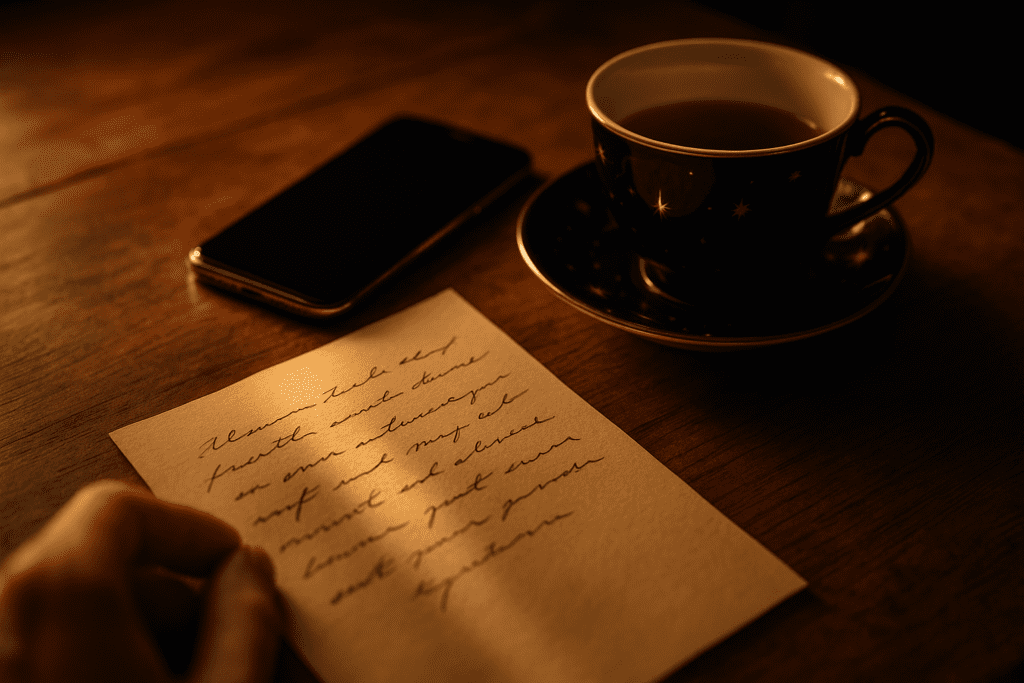
Emotional fog is not a clinical diagnosis, and it does not need to be dramatic to matter. It is the state of being so emotionally activated that your thinking becomes clouded. You may feel hot, shaky, panicky, numb, furious or desperate to be understood. You may also feel a strange certainty that everything must be resolved right now.
That urgency is often the clue. When you are in emotional fog, the mind tends to narrow. It selects the most painful detail, ignores nuance and turns every sentence into a verdict. A text written in that state can sound far more final, revealing or confrontational than you intended.
In plain English: your feelings are speaking very loudly, while your judgement is temporarily wearing earplugs.
Why big texts can backfire when you are overwhelmed
Texting has a peculiar habit of making emotional moments worse. There is no tone of voice, no reassuring glance, no chance to soften a sentence as you say it. A message that felt honest in the notes app can land as an accusation, a plea or a dramatic announcement once it is on the screen.
When you are overwhelmed, three things often happen:
- You over-explain. The message becomes longer, heavier and harder to read.
- You under-signal. What you really mean gets buried beneath panic or pride.
- You confuse urgency with truth. The need to send now can feel like proof that the message must be sent now.
That is why emotional fog is not a time for life-changing texts. If a message could affect a breakup, a resignation, a family rift or a serious boundary, it deserves a clearer head.
The kinds of messages you should not send yet
Not every emotional text is a mistake. A short, respectful note can sometimes be exactly right. But there are certain messages that are especially risky when you are flooded.
1. Breakup texts
Ending a relationship by text is not always wrong, but doing it from a place of raw pain often leads to regret, mixed signals or unnecessary cruelty. If you are writing, “This is over” at 1 a.m. because you feel rejected, pause. You may need distance first, not a final sentence.
2. Resignation or quitting texts
It is rarely wise to send a job resignation, a notice of quitting, or a heated message to a colleague while you are upset. Even if the job genuinely is not right for you, the wording can affect references, timing and your own peace of mind.
3. Friendship-ending messages
Sometimes a friendship genuinely needs to change. Even then, an emotional fog text can be too blunt, too punishing or too vague. If you are tempted to write a dramatic closing statement, it is often better to wait until you can be specific and calm.
4. Ultimatums and confrontational messages
Texts like “If you do not reply by tonight, I am done” usually come from distress rather than clarity. They may create pressure, not understanding. If you need a boundary, say it plainly later, without theatrics.
5. Big confessions
Declaring deep feelings, making a grand apology or sending a long explanation can all be beautifully human. They can also be premature if you are emotionally flooded. A confession sent in panic often asks the other person to manage your overwhelm for you.
A simple pause rule before you hit send
Here is a helpful rule: if the text feels life-changing, give it time to stop feeling urgent.
Try this:
- Write the message in your notes app, not directly in the chat.
- Wait at least 20 minutes before rereading it.
- If it still feels necessary, wait another 20 minutes.
- Read it as though it were written by a friend.
If the message still feels clear after that, it may be worth sending. If it suddenly sounds dramatic, accusatory or oddly intense, you have learned something useful.
You do not need to solve the whole situation in one sitting. Even the moon takes its time.
What to do instead of sending the text
Delaying does not mean suppressing. It means giving your feelings a safer route out of the room.
Draft it and save it
Write the text exactly as it comes to you, then save it. Getting the words out of your head often lowers the pressure immediately.
Send it to a trusted friend first
If you are unsure whether your message is fair, ask a sensible friend to read it. Choose someone who can be kind without fuelling the fire.
Use a voice memo
Sometimes the voice knows what the fingers cannot yet say. Record your thoughts, then listen back later when you are less activated.
Ground your body
Emotional clarity is not only mental. Try a few slow breaths, a glass of water, a short walk, or putting your feet flat on the floor for sixty seconds. These small acts may sound almost too simple, but they help to interrupt the spiral.
Sleep on it when possible
Late-night texting deserves its own warning label. If the issue is not urgent, let the night do some of the work for you.
When a text should be sent right away
There are moments when waiting is not the kindest option. If safety is involved, if someone needs urgent practical information, or if a clear boundary must be stated to prevent further harm, a prompt message may be appropriate.
For example, a short text such as, “I am not able to discuss this tonight. I will reply tomorrow,” can be both calm and immediate. The goal is not silence. The goal is precision.
If you are dealing with anything that feels unsafe, threatening or emotionally overwhelming in a serious way, it is important to seek appropriate support rather than relying on text alone.
How to reply later without overexplaining
When you are calmer, you do not need to write a novel. In fact, a shorter response is often stronger.
Try one of these simple patterns:
- “I saw your message. I am not in the right headspace to reply properly yet, but I will come back to this.”
- “I need a little time before I respond thoughtfully.”
- “I do want to address this. I am going to reply later when I can do it properly.”
These are especially useful because they hold a boundary without inflaming the moment. No drama required. The cosmos approves of a well-timed pause.
A calm-message checklist
Before sending any life-changing text, ask yourself:
- Am I upset enough that I might regret the wording?
- Would I send this in the same way tomorrow morning?
- Is this message clear, or is it trying to make the other person feel something?
- Am I asking a text to do the job of a face-to-face conversation?
- Does this need sending now, or does it need breathing room?
If you answer yes to the first few questions, you probably need more time.
That is not failure. That is emotional intelligence.
The spiritual side of pausing
From an intuitive perspective, emotional fog often appears when your inner world is trying to protect something tender. The instinct to send a big text can be a plea for relief, clarity or control. Pausing does not dismiss that instinct. It honours it.
In spiritual terms, this is the moment to choose discernment over reaction. A quiet pause can reveal whether your message is rooted in truth, fear, hurt, pride or hope. Sometimes the answer is all four, which is very human indeed.
If you are reading this because your own situation feels tangled, remember that clarity rarely arrives by force. More often, it comes when we stop chasing the next message and start listening properly.
Final thought
Emotional fog is not a time for life-changing texts. It is a time for softening, pausing and allowing the storm to pass before you make a decision that matters. You do not need to be perfectly calm before you speak. You simply need to be calm enough to mean what you say.
If your message still feels important after the feeling has settled, send it with care. If it does not, you may have saved yourself a fair amount of regret and a very awkward reread.
Need a more personal answer? For guidance shaped around your own question, you can speak with one of Philip Garcia’s trusted psychic readers. Click on this link or call 0203 472 4377
Disclaimer: Psychic and astrological content is provided for entertainment and personal insight. It should not replace professional medical, legal, financial or mental health advice.
Suggested internal reading: If you are exploring timing, boundaries or emotional clarity, you may also enjoy our guide to calmer communication when emotions run high.
Frequently Asked Questions
What is emotional fog?
Emotional fog is the state of being so upset or overwhelmed that your thinking becomes cloudy. You may feel urgent, reactive or desperate to act before you have fully thought things through.
Should I send a big text when I am upset?
Usually, it is better to pause first. If the message could change a relationship, job or boundary, waiting until you feel clearer often leads to a more thoughtful result.
How long should I wait before texting back?
There is no perfect rule, but waiting 20 to 60 minutes can help for minor reactions. For bigger messages, sleeping on it is often wiser if the situation is not urgent.
What should I do instead of sending the text right away?
Write it in your notes app, breathe, walk away for a little while, or show it to a trusted friend first. These steps help you separate the feeling from the final wording.
Is it ever okay to send a text while emotional?
Yes, if you need to set a clear boundary, share urgent information or respond to something time-sensitive. In those cases, keep the message short, calm and specific.
For guidance shaped around your own question, you can speak with one of Philip Garcia’s trusted psychic readers. Click on this link or call 0203 472 4377
Psychic and astrological content is provided for entertainment and personal insight. It should not replace professional medical, legal, financial or mental health advice.