


Why Young People Love Tarot: The Modern Meaning Behind the Cards
Why Young People Love Tarot: The Modern Meaning Behind the Cards
If you have ever wondered why young people love tarot, the short answer is this: it speaks to the need for meaning, reassurance and a bit of emotional clarity without being judgemental or stuffy. For many younger people, tarot is not just about predicting the future. It is a way to reflect, pause, ask better questions and make sense of life when everything feels a little loud.
Quick answer: young people are drawn to tarot because it combines self-reflection, ritual, aesthetics and community. It feels personal rather than prescriptive, and social media has made it more visible, approachable and easy to share. In a world that often feels uncertain, tarot offers a calm moment of insight.
What tarot means to young people today
For many younger readers, tarot is less about a dramatic fortune-telling moment and more about a conversation with intuition. The cards can act like prompts: What am I avoiding? What do I need to notice? Where am I being honest, and where am I telling myself a little story that needs editing?
That is part of its charm. Tarot does not usually demand that you believe one single thing. It gives you space to interpret. In a generation used to curated feeds, endless opinions and constant self-definition, that flexibility matters.
It also helps that modern tarot culture often feels inclusive. People use it alongside astrology, journalling, manifestation, meditation or plain old quiet thinking. It becomes a language for personal insight rather than a rulebook.
Why tarot feels relevant in an uncertain world
Young adulthood has never been a perfectly tidy chapter, but many younger people have come of age during economic pressure, online comparison, climate anxiety and a general sense that the future is less predictable than it once seemed. In that context, tarot can feel oddly soothing.
Not because it solves everything, but because it creates a pause. A spread of cards can help someone step back from the immediate swirl of worry and look at a situation symbolically. That symbolic distance can be useful. It can make feelings easier to name and choices easier to consider.
For example, someone deciding whether to stay in a relationship, apply for a new job or change course with their studies may not want a rigid yes-or-no answer. They may want a moment of reflection. Tarot can offer that, which is why it often sits comfortably alongside emotional honesty and self-care.
How social media helped tarot go mainstream
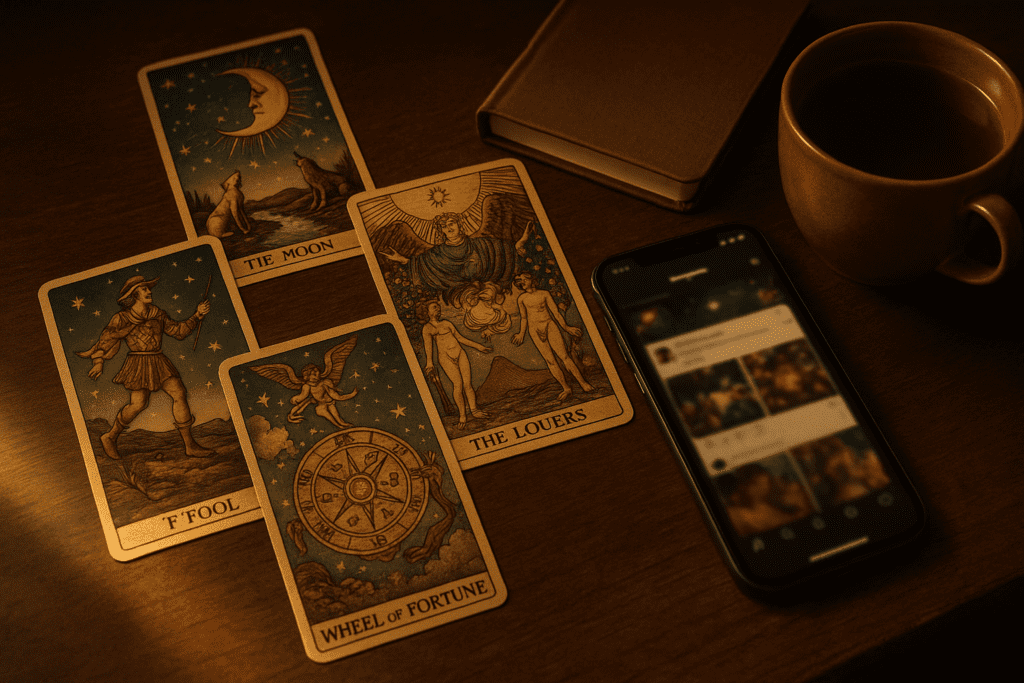
It is impossible to talk about the tarot trend among young people without mentioning social media. TikTok, Instagram and YouTube have turned tarot into something visually immediate and easy to share. A three-card pull can become a short video, a story post or a caption that feels oddly personal even when seen by thousands.
This matters because social platforms reward quick recognition. Tarot, with its striking imagery and symbolic language, is made for that environment. The cards are beautiful. The meanings are adaptable. The format is compact. In other words, tarot is highly shareable without feeling shallow, at least when used thoughtfully.
Online communities have also made tarot feel less intimidating. Young people can observe others, learn the basics at their own pace and see many different styles of reading. Some use tarot seriously. Some use it playfully. Some do both, which is rather human, really.
Tarot as self-reflection, not just fortune-telling
One of the biggest reasons why Gen Z likes tarot is that it works well as a tool for self-reflection. A reading does not have to predict a fixed outcome to be meaningful. It can mirror the emotional tone of a moment and bring unconscious concerns into view.
That makes tarot feel practical. It can help someone notice patterns in relationships, uncertainty around work, or a recurring habit of second-guessing themselves. Rather than handing over authority, a thoughtful reading often returns it to the reader in a gentler form.
For example, if someone keeps pulling cards associated with boundaries, they may begin to reflect on where they are saying yes too quickly. If another reading keeps circling back to patience, they may realise they are pushing for certainty before they have all the information. The cards are not the boss. They are the mirror.
Why Gen Z is drawn to spirituality without institutions
Many young people describe themselves as spiritual but not religious. That does not necessarily mean they reject tradition. More often, they want practices that feel personal, flexible and emotionally authentic. Tarot fits neatly into that space.
It offers ritual without rigid dogma. It creates structure without requiring someone to hand over their judgement. And for people exploring identity, healing or purpose, that can be hugely appealing.
There is also a broader cultural shift at work. Younger generations are often open to multiple forms of meaning-making at once. One person may follow their birth chart, keep a tarot deck by the bedside, read about attachment styles and still enjoy a perfectly sensible cup of tea before making a decision. Spirituality, for many, has become more conversational than ceremonial.
The role of aesthetics, ritual and community
Let us not underestimate the power of a beautiful object. Tarot decks are visually rich, symbolically layered and often designed with care. The aesthetic appeal is real. A deck can feel like an object of reflection, a bit like a notebook, a keepsake or a lucky charm with better design credentials.
Ritual matters too. Shuffling cards, lighting a candle, taking a quiet breath and asking a clear question can create a sense of focus that modern life rarely encourages. That small pause can be grounding, especially when everything else feels fragmented.
Community plays its part as well. Online tarot circles, creator pages and reader-led spaces can make people feel less alone in their curiosity. For a young person who has never quite felt at home in conventional spirituality, that sense of belonging can be powerful.
Is tarot a trend or a lasting practice?
Some interest in tarot is undoubtedly trend-driven. That is true of many cultural movements. But tarot has remained relevant for centuries because it adapts. It can be mystical, psychological, symbolic, artistic or practical, depending on how it is approached.
So is it just a trend? Not really. The trend part is the visibility. The lasting part is the usefulness. If a practice keeps helping people think, feel and reflect more clearly, it tends to stay.
That is perhaps the real reason young people and divination continue to find each other. Tarot speaks to a modern desire for meaning without pressure, guidance without judgement and insight without anyone pretending life is neatly solved.
What this says about modern youth culture
The popularity of tarot among younger people says something quite generous about this generation. It suggests a willingness to explore inner life, question inherited assumptions and seek guidance in forms that feel human rather than authoritative.
It also shows that spirituality is changing shape. For many, it is no longer about belonging to one system. It is about creating a personal practice that helps them feel steadier, clearer and more connected to themselves.
So if you have been wondering why young people love tarot, the answer is not only that it looks good on a screen or feels trendy in the moment. It is because tarot offers a language for uncertainty, emotion and hope. And frankly, that is a language many people of any age could use more often.
If you are curious about what a reading might say about your own situation, or how tarot works alongside astrology and intuition, there is plenty more to explore. And if you would like a more personal answer, you can speak with one of Philip Garcia’s trusted psychic readers. Click on this link or call 0203 472 4377.
Disclaimer: Psychic and astrological content is provided for entertainment and personal insight. It should not replace professional medical, legal, financial or mental health advice.
Frequently Asked Questions
Why are young people so interested in tarot?
Many younger people like tarot because it offers self-reflection, ritual, aesthetics and a sense of guidance without rigid rules. It can feel personal, calming and easy to integrate into modern life.
Is tarot just a social media trend?
Social media has made tarot more visible and shareable, but its appeal goes beyond trends. Many people use it as a reflective practice, so it tends to last when it remains useful.
Do young people use tarot for prediction?
Some do, but many use it more as a tool for insight and reflection than as fixed prediction. The cards often help people think more clearly about emotions, decisions and patterns.
Why does tarot appeal to Gen Z?
Gen Z is often drawn to practices that feel flexible, personal and spiritually open. Tarot fits that mood, especially for people who prefer meaning-making over strict institutions.
For guidance shaped around your own question, you can speak with one of Philip Garcia’s trusted psychic readers. Click on this link or call 0203 472 4377
Psychic and astrological content is provided for entertainment and personal insight. It should not replace professional medical, legal, financial or mental health advice.


