


The Folklore of Crows and Ravens: Meanings, Myths and Symbolism Across Cultures
The Folklore of Crows and Ravens: Meanings, Myths and Symbolism Across Cultures
If you have ever paused to watch a black bird cut across the sky, you will know the feeling: a tiny lift of mystery, a flicker of unease, and perhaps a little curiosity too. The folklore of crows and ravens is built on exactly that reaction. For centuries, people have seen these birds as omens, messengers, tricksters and keepers of hidden knowledge.
Quick answer: In folklore, crows and ravens are often associated with omens, death, wisdom, prophecy and messages between worlds. Their exact meaning changes by culture. Ravens are frequently linked with sacred knowledge and divine messengers, while crows are often seen as clever tricksters or signs of change.
That said, there is no single universal meaning. One tradition may treat a raven as a guide, while another sees a crow as a warning. As with astrology or tarot, context matters. The same symbol can carry more than one message depending on where it appears and who is interpreting it.
What the folklore of crows and ravens is really about
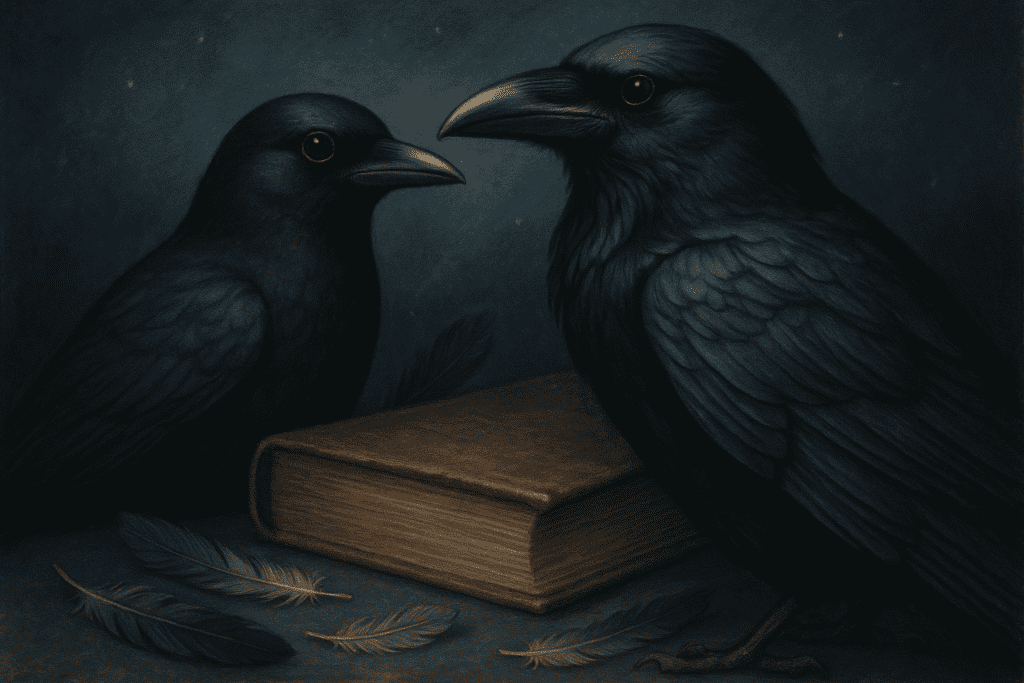
At heart, the folklore of crows and ravens reflects how humans respond to intelligence, darkness and uncertainty. These birds are bold, observant and highly adaptable. They are also black, which has long made them easy candidates for stories about the night, the unseen and the threshold between life and death.
In many cultures, they are not simply feared. They are respected. People noticed that corvids seemed clever, social and difficult to fool, so folklore gave them roles that matched their sharp behaviour: scouts, messengers, guardians, thieves, shape-shifters and sometimes divine assistants.
Crows vs. ravens: what is the difference in myth and meaning?
In everyday conversation, crows and ravens are often grouped together, and in folklore they do overlap. Still, the distinction can matter. Ravens are usually the larger, more solitary bird, and in myth they are often given a grander, more ceremonial role. Crows tend to appear as practical, cheeky, watchful figures who stay close to human life.
That is not a hard rule, of course. Folklore is delightfully untidy. In one story a crow may be a wise helper; in another, a raven may be a trickster with soot on its feathers and an agenda of its own. The important point is that both birds are symbolic, but not identically so.
Why black birds became symbols of omens and mystery
Black birds have always invited storytelling. Their colour links them with night, shadow and hidden things, and their sudden calls can feel dramatic even on an ordinary morning. When a bird appears at a doorstep, on a battlefield, or near a place of grief, it is hardly surprising that the human mind reaches for meaning.
That is why birds as omens became such a lasting part of folklore. A crow on the roof might suggest change. A raven circling overhead might feel like a messenger. These readings are not scientific facts, but they are culturally powerful ways of making sense of experience.
Crows and ravens in Norse mythology
In Norse mythology, ravens are especially prominent. They are often connected with wisdom, memory and prophecy, and they appear as companions to Odin, the god associated with knowledge, war and insight. Ravens in this setting are not simply birds of doom. They are carriers of information, gathering what is hidden and returning with news.
This is one reason raven mythology has remained so resonant. The bird becomes a symbol of thought itself: watchful, intelligent and willing to cross boundaries. It is a fitting figure for anyone interested in spiritual timing, signs and the meaning behind what seems random at first glance.
Crows and ravens in Celtic and British folklore
In Celtic and wider British folklore, crows and ravens often appear as birds of battle, prophecy and the otherworld. They are associated with warfields because they arrive where human life is fragile, which naturally gave them a grim reputation. Yet they were also seen as powerful and knowing creatures, not merely sinister ones.
The Irish figure of the Morrígan, for example, is often linked with raven imagery and with sovereignty, fate and battle. In British folklore more generally, a crow or raven can act as a warning, a watcher or a presence that reminds people to stay alert. The symbolism is darker, yes, but it is rarely one-note.
Crows and ravens in Native American traditions
Across many Native American traditions, corvid folklore is rich and varied. In some stories, Raven is a creator, a transformer or a bringer of light. In others, Raven is a trickster whose cleverness causes trouble as often as it solves it. Crows may also appear as intelligent beings with strong connections to the spirit world or to social lessons.
The key point here is respect. These are not interchangeable symbols, and meanings differ widely between nations and regions. A careful reader should avoid flattening them into one neat interpretation. Folklore is local, living and specific.
Tricksters, messengers and guardians: the positive side of corvid folklore
It is easy to focus only on the darker side of crow and raven symbolism, but that misses half the story. These birds are often protectors, guides and truth-tellers. They can reveal what is hidden, carry messages, or remind a person to stay alert and trust their judgement.
In practical life, this is why people still feel drawn to them. A crow appearing repeatedly might prompt reflection, not panic. A raven in a dream might suggest that a situation needs closer attention. Folklore invites interpretation, but it does not demand fear.
Why they are linked to death, war and the supernatural
The association with death comes from proximity and symbolism. Crows and ravens were seen near battlefields, burial places and harsh winter landscapes. They fed where life had ended, so people linked them with mortality. Over time, that association extended into the supernatural: spirits, the underworld, prophecy and the unseen.
Still, death in folklore does not always mean literal loss. It can also point to endings, transformation and the closing of one chapter before another begins. That is why these birds remain so compelling in divination, literature and spiritual symbolism.
How modern culture reshaped crow and raven symbolism
Modern films, novels and television have made ravens and crows even more iconic. Sometimes they are painted as eerie companions; sometimes as intelligent allies with a gothic edge. That has broadened their symbolism rather than replacing the older traditions.
Today, many people read them as signs of intelligence, independence and mystery. Others still feel the old shiver of superstition. Both reactions are part of the same long story. These birds have survived in the imagination because they feel alive to meaning.
Final takeaway: what crows and ravens mean in folklore
The folklore of crows and ravens is less about a single fixed meaning and more about possibility. They can be omens, messengers, tricksters, guardians or sacred figures. They can warn, guide or simply ask us to pay attention.
If you are drawn to them, that may be because they speak to a part of you that notices patterns and trusts intuition. And if you simply enjoy the mythology, they offer one of the richest bird symbolisms in world folklore: dark, clever, ancient and never dull.
Need a more personal answer? For guidance shaped around your own question, you can speak with one of Philip Garcia’s trusted psychic readers. Click on this link or call 0203 472 4377
Psychic and astrological content is provided for entertainment and personal insight. It should not replace professional medical, legal, financial or mental health advice.
If you would like to explore the wider symbolism behind birds, or how animal messages may connect with your own path, Philip Garcia has more guidance on intuition, signs and spiritual insight across the site.
Optional internal links
- Read more about bird symbolism and mythology in our wider spiritual guides.
- Explore crow symbolism for a more focused look at crow omens and meaning.
- Visit our raven symbolism article for deeper insight into raven mythology.
- See related writing on animals in mythology and birds as omens.
Frequently Asked Questions
What is the folklore of crows and ravens?
It is the body of stories, beliefs and symbols that link these birds with omens, death, wisdom, magic, prophecy and messengers between worlds.
Are crows and ravens the same in folklore?
Not exactly. They overlap, but ravens are often given larger, more sacred roles, while crows are frequently cast as tricksters, watchers or signs of change.
Why are crows and ravens seen as ominous?
Their black colour, dramatic calls and habit of appearing near death, battle or burial sites helped create strong associations with warning and mystery.
Are crows and ravens always bad signs?
No. In many traditions they are wise, protective or spiritually significant. Their meaning depends on the culture and the story being told.
What do ravens symbolise in mythology?
Ravens often symbolise intelligence, prophecy, memory, transformation and divine knowledge, especially in Norse and Celtic traditions.
For guidance shaped around your own question, you can speak with one of Philip Garcia’s trusted psychic readers. Click on this link or call 0203 472 4377
Psychic and astrological content is provided for entertainment and personal insight. It should not replace professional medical, legal, financial or mental health advice.