

Peace Feels Strange When You Have Lived in Storms: Why Calm Can Feel Unfamiliar
If peace feels strange when you have lived in storms, you are not imagining it, and you are certainly not alone. For many people, calm does not arrive like a soft blanket. It arrives like a room that is too quiet. The ears prick up. The shoulders stay lifted. The mind begins asking, quite rudely, what now?
That reaction makes sense. When life has taught you to brace for the next problem, your body can find stability suspicious at first. Peace may look lovely on the outside, but inside it can feel oddly exposed. The good news is that this does not mean something is wrong with you. It often means your system has been trained by survival, not safety.
Quick answer: why does peace feel strange after living through storms?
Peace can feel strange after chaos because your mind and body may still be expecting danger. If you have spent a long time in stress, conflict, grief, instability or emotional upheaval, your nervous system may have become accustomed to alertness. Calm can then feel unfamiliar, boring, unreal or even unsettling. That reaction is common, and it can soften with time, care and repeated experiences of safety.
Why peace can feel strange after living through storms
There is a particular kind of exhaustion that comes from having to be on guard for too long. You may have learned to scan every room, every tone of voice, every text message, every change in atmosphere. In that state, life becomes less about living and more about preparing.
So when the storm finally eases, the silence can feel loud.
This is one reason people sometimes miss chaos, even when chaos hurt them. It is not that the storm was good for you. It is that it was familiar. And familiarity has a persuasive little way of dressing itself up as comfort.
Peace, by contrast, can feel emotionally under-dressed. You may find yourself waiting for the next wobble. You may even create one, without meaning to, because calm feels too unfamiliar to trust.
Your body may still be expecting danger
Sometimes the issue is not your thoughts, but your body’s memory. After prolonged stress, the body can stay in a state of hypervigilance, which simply means it remains watchful for signs that something might go wrong. This can show up as trouble resting, difficulty sleeping, a tight chest, irritability, startle responses or the uneasy feeling that you should be doing more.
In spiritual terms, you might say your energy is still braced. In practical terms, your system may not yet have received enough repeated evidence that it is safe to let go.
That is why peace may not feel peaceful straight away. Sometimes it feels awkward before it feels restful. Sometimes it feels blank before it feels nourishing. Sometimes it feels, frankly, suspiciously like a trick.
The comfort of chaos is often familiarity, not safety
One of the hardest truths is that a chaotic life can become strangely reassuring simply because it is known. If you grew up around instability, if you were in a difficult relationship, or if you spent years in crisis mode, calm may not match the emotional language your system learned first.
You may notice thoughts such as:
- This is too quiet.
- Something must be coming.
- I should be worried about something.
- Why do I feel restless when things are finally okay?
These thoughts are not proof that you want the storm back. They are often proof that your body is still learning how to live without it.
That distinction matters. It takes a little pressure off the soul.
What healing can feel like at first
Healing is not always serene. Sometimes it is clumsy, emotional and oddly ordinary. You may expect transformation to feel cinematic, but real healing often looks more like quietly noticing that you are less tense than you used to be.
At first, peace may feel like:
- restlessness after a quiet day
- guilt for not being busy
- anxiety when nobody is asking for anything
- the urge to check, fix or anticipate
- a sense that calm is boring or empty
None of that means you are moving backwards. It may simply mean your inner world is adjusting to a gentler rhythm. That adjustment can be uncomfortable, but it is often part of the process.
And, to be fair, change never sends a polite invitation. It just turns up and rearranges the furniture.
Peace is not the same as numbness
Sometimes people worry that they are not truly healed because they do not feel blissful. That is understandable. Yet peace is not the same as emotional numbness, and it is not the same as pretending nothing happened.
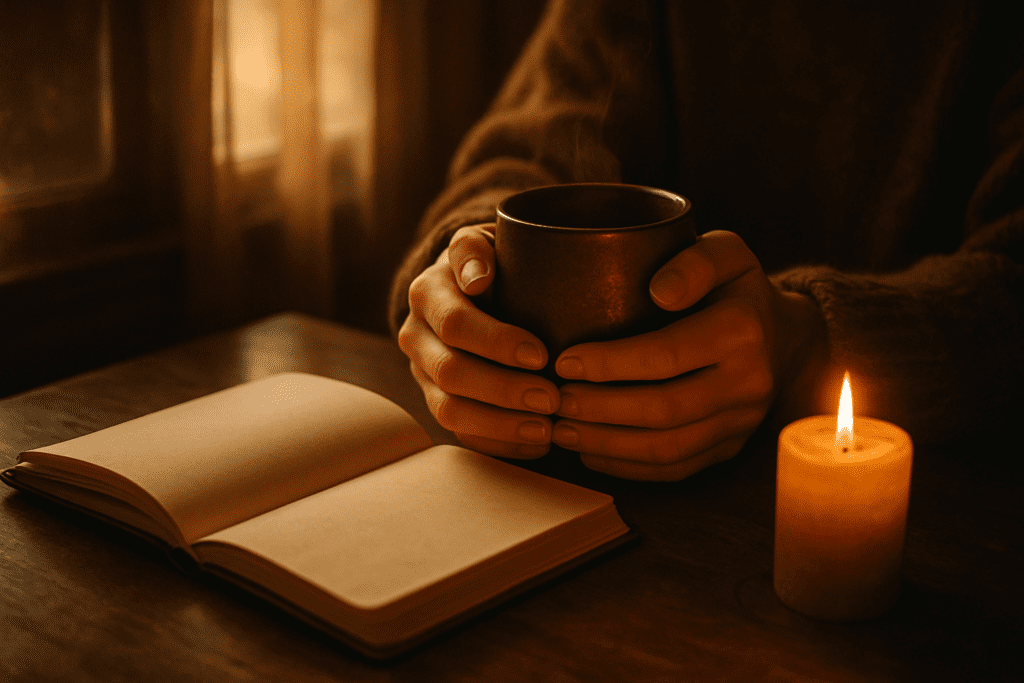
Real peace usually has a quiet pulse to it. It allows feeling, but without the constant alarm. It makes room for ordinary life: a cup of tea that stays hot, a conversation that does not spiral, an evening that ends without drama. Small things, yes, but they matter. A great deal.
If you are unsure whether you are feeling peace or simply shutting down, ask yourself:
- Do I feel more settled, or more disconnected?
- Can I still notice my feelings without being swallowed by them?
- Am I resting, or am I disappearing?
Those questions can offer gentle clarity without forcing an answer.
Small ways to let calm feel safer
You do not have to rush your nervous system into trust. It usually responds better to consistency than to grand gestures. Small, repeated experiences of safety matter more than dramatic declarations of healing.
Try this instead:
- Name what is happening. Say to yourself, “This quiet feels unfamiliar, but unfamiliar does not mean unsafe.”
- Keep a simple routine. Regular meals, sleep and daily rhythms can help the body settle.
- Notice what helps you soften. This might be soft light, music, a walk, prayer, journalling or a favourite mug that feels comfortingly decent.
- Limit unnecessary alarm. If you are constantly checking messages, news or other people’s moods, your system may stay activated.
- Let peace be gradual. You do not have to feel safe all at once. A little more ease is enough for today.
If you are spiritually inclined, you might also find it helpful to check in with your intuition. Sometimes the body notices what the mind has not fully named yet. A card pull, a quiet moment of reflection or a trusted astrological reading can help you make sense of an emotional season without forcing certainty where there is none.
How astrology and psychic guidance can support this season
For some people, spiritual guidance becomes especially comforting during the transition out of chaos. A birth chart may highlight where you seek security, where you resist vulnerability, or where old emotional patterns still linger. Tarot can offer language for what feels hard to name. Psychic insight may help you reflect on whether you are being called towards rest, boundaries, closure or a new chapter.
Used well, this kind of guidance does not replace your own judgement. It supports it. It can help you see the emotional weather more clearly, so you are not trying to make sense of your life in the dark.
If you like working with symbols, you might notice that peace often arrives with its own little signs: a lighter mood, a dream that feels calmer, a sudden wish to tidy, or an urge to clear old messages and old energy. Nothing mystical has to be forced. The simple noticing is enough.
When to seek extra support
If calm still feels unbearable after a long time, or if you are struggling with persistent anxiety, panic, low mood or sleep issues, it may help to speak to a qualified mental health professional. Spiritual support and practical support can sit side by side very nicely. One does not cancel out the other.
You deserve care that is appropriate to what you are carrying. Sometimes the kindest thing is to let someone help you hold it.
A gentler way forward
If peace feels strange when you have lived in storms, perhaps the aim is not to make it feel perfect. Perhaps the aim is simply to let it feel a little less foreign each day.
You do not need to prove that you are healed by loving every quiet moment. You only need to keep meeting calm with a little more patience than before. In time, your body may begin to learn what your soul has been hoping for all along: that not every silence hides danger, and not every stillness is waiting to break.
Peace may feel strange at first. But strange is not the same as wrong. Sometimes it is simply the first sign that life is changing shape.
Need a more personal answer? For guidance shaped around your own question, you can speak with one of Philip Garcia’s trusted psychic readers. Click on this link or call 0203 472 4377.
Disclaimer: Psychic and astrological content is provided for entertainment and personal insight. It should not replace professional medical, legal, financial or mental health advice.
Frequently Asked Questions
Why does peace feel weird after trauma or stress?
Because your mind and body may still be expecting danger. After a long period of stress, calm can feel unfamiliar, and unfamiliar can feel unsafe at first.
Is it normal to feel anxious when life gets calm?
Yes. Many people feel uneasy when the pressure lifts, especially if they have spent a long time in survival mode. That reaction is common and understandable.
How do I get used to feeling safe again?
Slowly and gently. Repeated routines, emotional consistency, rest, boundaries and small moments of comfort can help your system begin to trust calm.
Why do I miss the storm even though it hurt me?
Often because the storm was familiar. Familiarity can feel comforting to the nervous system, even when the experience itself was painful.
What does healing feel like emotionally?
Healing can feel uneven at first. It may bring restlessness, relief, guilt, tenderness or uncertainty before it starts to feel steadier and more natural.
For guidance shaped around your own question, you can speak with one of Philip Garcia’s trusted psychic readers. Click on this link or call 0203 472 4377
Psychic and astrological content is provided for entertainment and personal insight. It should not replace professional medical, legal, financial or mental health advice.


