
Halloween, Samhain and the Thinning Veil: What It Means and Why It Matters
Every October, people start asking the same quietly fascinating question: what is the real connection between Halloween, Samhain and the Thinning Veil? The short answer is that Halloween and Samhain are related, but they are not identical, and the “thin veil” is best understood as a modern spiritual phrase rather than a hard historical fact. Still, it is a phrase that resonates for many people, because this part of the year often feels reflective, eerie, and oddly tender all at once.
Quick answer: Samhain is an ancient seasonal festival linked with the end of harvest and the beginning of winter. Halloween grew from later Christian and folk traditions around the same date. The “thinning veil” refers to the belief that the boundary between the living and the dead feels easier to sense around this time of year, especially in modern pagan and spiritual practice.
If you have ever felt more nostalgic in late October, more drawn to candles, ancestral stories or a brisk walk at dusk, you are not alone. The season itself encourages a different pace. The light changes, the evenings draw in, and the atmosphere seems to invite us to look both backwards and inwards.
What is Samhain?
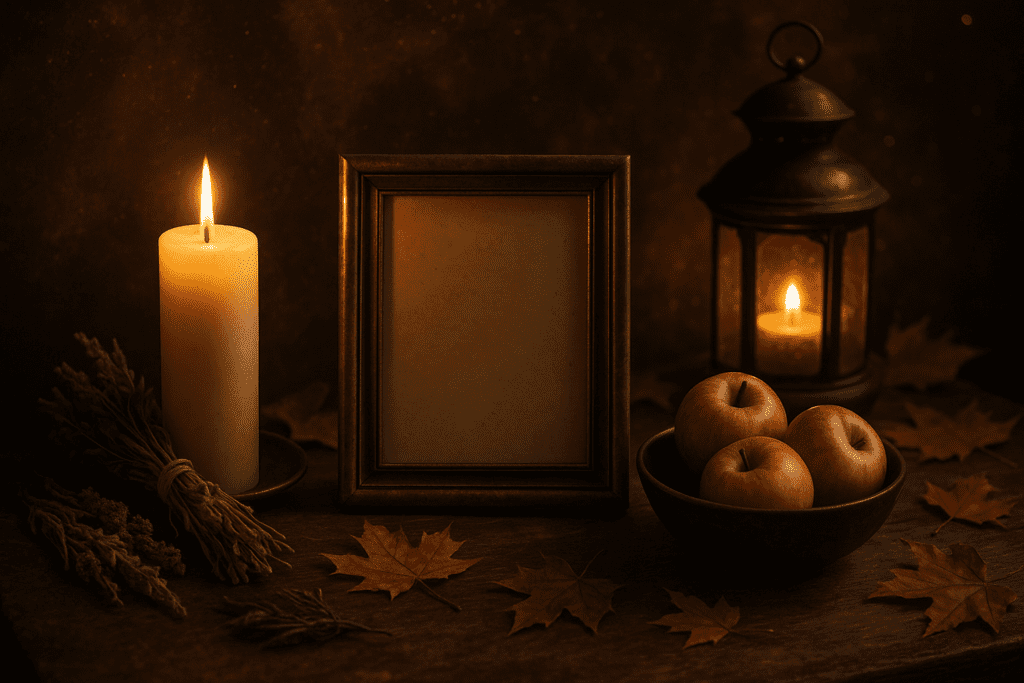
Samhain is an old festival associated with the Celtic calendar and the close of the harvest season. In many modern interpretations, it is seen as the turning point into the darker half of the year. Some people refer to it as the Celtic New Year, though that phrase can be a little neat for something that varied across time and place.
Historically, Samhain was not one fixed, universal event with a single rulebook. It was part of a wider seasonal rhythm of rural life. Think less “perfectly preserved ancient ceremony” and more “deeply meaningful seasonal observance shaped by local custom”. That is rather more honest, and frankly more interesting.
In contemporary pagan and Wiccan traditions, Samhain is often a time for honouring ancestors, remembering the dead, and reflecting on endings, release and renewal. For some, it is solemn. For others, it is quietly celebratory. Many experience it as both.
How Halloween and Samhain are connected
Halloween falls on 31 October, the eve of All Saints’ Day in the Christian calendar. Over time, Christian observance, folk customs and older seasonal traditions all became woven together. That is why Halloween is such a distinctive mix of costumes, lanterns, sweets, ghost stories and old superstitions.
Samhain and Halloween overlap in date and atmosphere, but they are not the same thing. Samhain belongs to a specific strand of pre-modern Celtic and modern pagan seasonal practice. Halloween, by contrast, is a much broader cultural holiday shaped by centuries of change.
So if someone says Halloween “comes from” Samhain, that is only partly true. There is a connection, certainly, but it is not a simple one-to-one line from ancient ritual to modern trick-or-treating. History is messier than that, which is usually a sign that it is real.
What people mean by the thinning veil
The phrase thinning veil is commonly used in spiritual circles to describe a time when the boundary between the physical world and the unseen feels softer. In practical terms, people may notice more vivid dreams, stronger intuition, a sense of presence, or a greater pull towards memorialising loved ones.
It is worth saying plainly: the “veil between worlds” is a spiritual belief and a poetic idea, not something that can be measured like rainfall. It has meaning because people experience it meaningfully. That makes it culturally and personally significant, even if it is not a scientific claim.
For many readers, the phrase simply gives language to a familiar feeling. Late October can make the inner life feel louder. Memories surface. Old grief can stir. Intuition may seem sharper. Whether you interpret that as spiritual sensitivity, seasonal psychology, or a bit of both, the language of the veil can be comforting.
Historical roots versus modern spiritual belief
This is the bit that matters if you want clarity. The historical Samhain festival and the modern phrase “the thinning veil” are related in spirit, but not identical in origin.
- Historical Samhain: a seasonal observance tied to the end of harvest and the approach of winter.
- Folk tradition: stories, customs and beliefs about spirits, protection and the dead.
- Modern pagan practice: contemporary rituals that honour ancestors, cycles of nature and personal reflection.
- Thinning veil language: a later spiritual way of describing the sense that this time of year feels open, liminal or more receptive.
That distinction is helpful because it avoids flattening everything into one neat myth. The truth is more nuanced. Halloween, Samhain and the veil idea sit in a shared seasonal space, but they come from different layers of history and belief.
How Samhain is observed today
Modern Samhain observance varies widely. Some people hold a quiet candlelit ritual at home. Others prepare an ancestor altar with photographs, flowers or small mementoes. Some write down what they wish to release before winter. Others simply cook something seasonal and spend the evening with people they love.
Practical examples can make this feel less abstract:
- Lighting a candle in memory of someone you miss.
- Taking a walk at dusk and noticing the changing season.
- Writing a short list of what you are ready to let go of before the new year.
- Pulling a tarot card for reflection rather than prediction.
- Placing a few meaningful objects on a table as a simple ancestor space.
None of these need to be grand or theatrical. Samhain is often at its most powerful when it is simple, sincere and unhurried.
Why this season still feels so powerful
Even for people with no spiritual practice at all, late October has a particular emotional texture. The light is lower. The air changes. The year feels as though it is folding in on itself a little.
That is one reason the idea of the veil remains so popular. It gives a name to the feeling that this season sits between worlds: summer and winter, light and dark, living memory and ancestral memory, endings and beginnings. Humans have always liked a threshold, and this is a very good one.
If you are drawn to tarot, astrology, or intuitive work at this time of year, you may find your inner life becomes a touch more reflective. That does not mean everything has to be solemn. It simply means the season lends itself to noticing what is ready to shift.
Final takeaway
Halloween, Samhain and the Thinning Veil are connected by season, symbol and feeling, but they are not the same thing. Samhain is the older seasonal festival. Halloween is the wider cultural holiday that developed around the same date. The thinning veil is a modern spiritual phrase used to describe the sense that this time of year feels especially liminal.
That blend of history, folklore and personal meaning is exactly why the season remains so compelling. It is practical, symbolic and a little mysterious all at once. Which, let us be honest, is rather the point.
Need a more personal answer? For guidance shaped around your own question, you can speak with one of Philip Garcia’s trusted psychic readers. Click on this link or call 0203 472 4377
Psychic and astrological content is provided for entertainment and personal insight. It should not replace professional medical, legal, financial or mental health advice.
FAQs
Is Halloween the same as Samhain?
No. They are related, but not the same. Samhain is an older seasonal festival, while Halloween is a later holiday shaped by Christian, folk and popular traditions.
What does the thinning veil mean?
It usually means the spiritual belief that the boundary between the living world and the unseen world feels easier to sense around late October and early November.
Is the thinning veil an ancient Celtic belief?
Not in the exact modern wording. The phrase is mainly used in contemporary spiritual practice, though it draws on older folklore and seasonal ideas about liminal time.
How do people celebrate Samhain today?
Common modern practices include candle lighting, ancestor remembrance, quiet reflection, tarot reading, journalling and simple seasonal rituals.
Why do people feel more spiritual at Halloween?
Many people find the season naturally reflective. The darkening evenings, folklore and symbols of death and remembrance can make the period feel emotionally charged and meaningful.
For guidance shaped around your own question, you can speak with one of Philip Garcia’s trusted psychic readers. Click on this link or call 0203 472 4377
Psychic and astrological content is provided for entertainment and personal insight. It should not replace professional medical, legal, financial or mental health advice.