



You Are Allowed to Dress for the Day Emotionally: A Gentle Guide to Mood Dressing
If you have ever stood in front of your wardrobe and thought, I do not have the energy to be a whole polished person today, this is for you. You are allowed to dress for the day emotionally. Not for the imaginary version of yourself who always has matching shoes and a perfectly organised life. For the real one. The tired one. The hopeful one. The slightly wobbly one.
Emotional dressing, or mood dressing, simply means choosing clothes that reflect your inner state and support your day. Sometimes that looks like soft fabrics and forgiving shapes. Sometimes it means a crisp shirt when you need a bit of backbone. And sometimes it means putting on the jumper that feels like a hug and calling that enough, which, frankly, it often is.
Quick answer: dressing for the day emotionally means letting your outfit respond to your feelings, energy and comfort needs. It is a practical form of self-care that can help you feel more settled, more like yourself and less at war with the mirror.
What “You Are Allowed to Dress for the Day Emotionally” Means
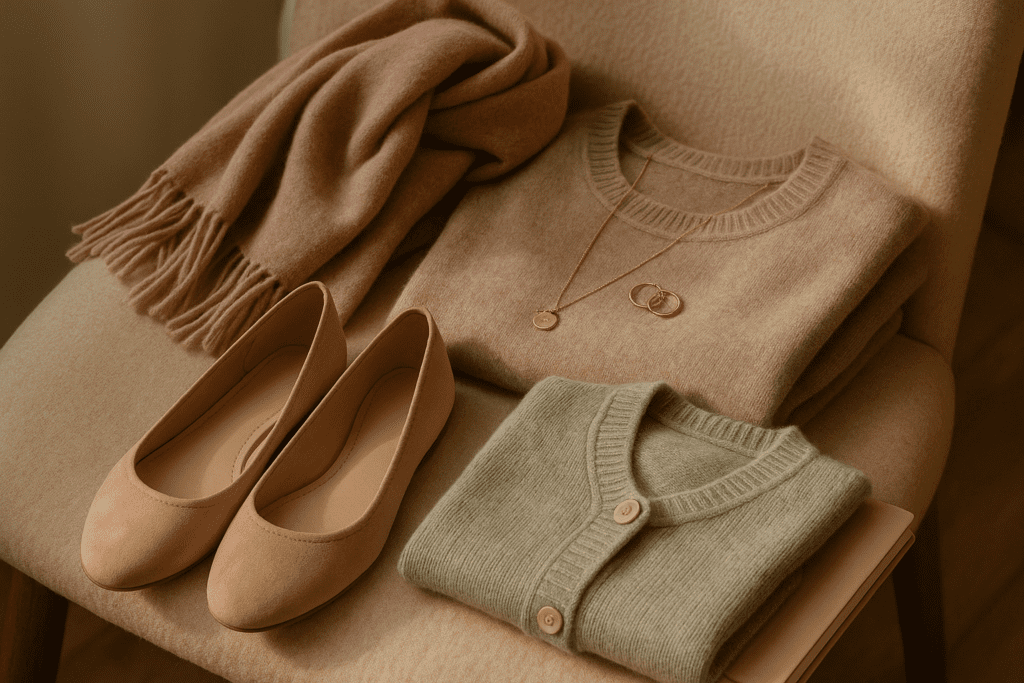
This phrase is not about being ruled by every passing feeling. It is about giving your emotions a seat at the table when you get dressed. If you feel overwhelmed, your clothes can be quieter. If you feel tender, your outfit can be softer. If you feel brave, you may want something with a little more shape or colour.
In plain terms, it is permission-based dressing. You are not dressing to impress an invisible audience. You are dressing to meet yourself where you are.
That can be especially helpful on days when your emotional state is clear in your body before it is clear in your head. Perhaps you wake up anxious and reach for a familiar knit. Perhaps you feel low and choose clothes that do not pinch, cling or demand too much of you. Perhaps you are processing grief, exhaustion or burnout and realise that “put together” is not the same thing as “supported”.
Why Emotional Dressing Can Help
Clothes do not solve everything, and no cardigan on earth can magically sort out your inbox. Still, what you wear can influence how safe, calm, contained or expressive you feel.
There is a reason people reach for certain outfits on important days. Clothing can create a sense of ritual. It can offer structure when life feels loose at the seams. It can also reduce friction, which is a very underrated form of comfort.
When your outfit feels aligned with your mood, you may spend less energy fighting yourself. That leaves more room for the practical business of getting on with the day. Sometimes emotional dressing is not about transformation. It is about not making things harder than they need to be.
What to Wear When You Feel Overwhelmed
When you feel overwhelmed, the goal is ease. Not style drama. Not a sudden fashion reinvention. Ease.
Choose pieces that feel predictable and kind to your senses:
- soft, breathable fabrics
- simple layers you can remove or add
- waistbands and necklines that do not annoy you
- shoes you do not have to negotiate with
A practical example: a relaxed jersey dress, a cardigan and comfortable trainers can feel far better than something structured that requires constant adjustment. The point is to reduce noise. Your outfit should not feel like another task.
A gentle style cue
If your mind is already busy, avoid clothes that ask too much of you. On overwhelmed days, straightforward often wins over clever.
What to Wear When You Feel Low-Energy
Low-energy days call for honesty. Not the kind that shouts, “I have given up,” but the kind that says, “I am conserving my strength.”
This is where comfort dressing becomes a form of practical wisdom. Reach for familiar shapes, low-effort combinations and pieces that do not require constant fussing. Think soft trousers, oversized shirts, knitwear, easy dresses or matching sets that make getting dressed less of a negotiation.
If getting ready feels like one job too many, a simple formula helps: one comfortable base layer, one warm layer, one clean outer layer. Enough to feel cared for, not overworked.
There is no moral virtue in suffering for an outfit.
What to Wear When You Feel Anxious
Anxiety often asks for containment. Clothing can help with that by offering a sense of steadiness and predictability.
You might prefer:
- familiar clothes you have worn on safe days
- natural fabrics that do not scratch or cling
- layers that give a feeling of protection
- calmer colours such as navy, soft grey, olive or cream
Some people find that a neat silhouette helps them feel more anchored. Others prefer a cocoon-like fit. There is no single right answer. The useful question is, What helps my nervous system feel less overstimulated?
If a waistband, seam or collar keeps pulling your attention, that is useful information. Your body is speaking. Fashion can wait a moment.
What to Wear When You Feel Sad
Sadness does not always want cheering up. Sometimes it wants gentleness.
On sad days, you might choose clothes that feel soft, muted or quietly beautiful. A favourite jumper. A scarf in a comforting colour. A dress that moves with you rather than against you. Emotional dressing here is less about “looking happy” and more about allowing your clothes to hold you with a bit of grace.
If you are grieving, recovering, or simply feeling tender, avoid forcing brightness if it feels false. You are not obliged to perform sunshine. You may, however, choose one small element that offers comfort — perhaps a colour you associate with kindness, or a piece of jewellery that feels grounding.
What to Wear When You Feel Unmotivated
When motivation is low, the smallest win is a good win. This is the time for outfits that are almost effortless but still help you feel human.
Try a repeatable formula:
- comfortable trousers or leggings
- a top you do not have to think about
- one finishing touch, such as earrings, a watch or a neat jumper
That finishing touch matters more than it sounds. It can stop an outfit from slipping into “I have completely disappeared into this sofa.” You do not need to be fully styled to feel present.
What to Wear When You Feel Hopeful or Energised
Hopeful days can handle a little more expression. This is where colour, shape and texture can become playful rather than merely practical.
You might want to wear something brighter, sharper or more deliberate. Perhaps a bold lip, a structured jacket or a colour that makes your eyes look alive. Maybe you feel like trying an outfit that says, quietly but clearly, Yes, I am back in the room.
Emotional dressing does not mean you must dress down when you feel low and dress up when you feel good. It simply means your clothes can mirror your state when that feels helpful.
Comfort vs Confidence: Finding the Middle
The sweet spot is often somewhere between a duvet and a power suit. You want comfort, yes, but also enough shape to help you feel intentional.
A good middle ground might include:
- a soft knit with tailored trousers
- trainers with a polished coat
- a relaxed dress with a structured bag
- loose layers in a colour that lifts you
Confidence is not always about looking bold. Sometimes it is about not feeling distracted by your own clothes. When an outfit is comfortable, sensible and pleasing to you, confidence has more room to grow.
Fabrics, Colours and Silhouettes That Support Mood
Different people respond to different things, but a few broad patterns are useful.
For calm: soft cotton, wool blends, jersey, gentle neutrals, simple lines
For energy: brighter colours, clean tailoring, sharper shapes, a bit of contrast
For safety: layers, familiar fabrics, slightly looser fits, enclosed shoes
For uplift: silk, satin, jewel tones, a joyful print, something with movement
Of course, your own preferences matter most. Some people feel soothed by black. Others feel drained by it. Some love texture; others need everything smooth and quiet against the skin. Your wardrobe does not need to pass a style test. It needs to work for your actual life.
How to Build an Emotion-Based Outfit Formula
If you want emotional dressing to feel easier, build a few dependable combinations in advance. You do not need dozens of options. You need a handful of outfits that match different states.
Try creating small categories such as:
- My calm outfit for anxious mornings
- My low-energy outfit for heavy days
- My polished but soft outfit for work or appointments
- My bright outfit for days when I want a lift
This is not about controlling your emotions through clothes. It is about making your wardrobe more responsive. A useful wardrobe is one that meets you half-way.
When Emotional Dressing Is Helpful — and When It Is Not
Emotional dressing is helpful when it brings comfort, confidence or ease. It is less helpful when it becomes another rule you must get right.
If you find yourself overthinking every outfit, or trying to use clothes to fix distress that needs deeper support, pause. Clothing can support emotional clarity, but it is not a cure-all. If you are struggling with persistent anxiety, low mood or overwhelm, it is sensible to seek appropriate professional support alongside any self-care practices.
The healthiest version of mood dressing is flexible. Some days your feelings lead. Some days practical needs lead. Either way, you are still allowed to show up as yourself.
Final Reminder: Your Clothes Do Not Need to Match a Social Expectation
You do not owe anyone a polished performance just because you have a body and a calendar. You are allowed to dress for the day emotionally. You are allowed to choose softness over stiffness, simplicity over showmanship and comfort over proving a point.
That may sound small, but it can be quietly radical. There is something powerful about deciding that your clothes should support your life, not complicate it. And if today’s answer is your softest jumper and your most forgiving trousers, then honestly, that sounds like a perfectly sensible kind of wisdom.
Need a more personal answer? For guidance shaped around your own question, you can speak with one of Philip Garcia’s trusted psychic readers. Click on this link or call 0203 472 4377
Psychic and astrological content is provided for entertainment and personal insight. It should not replace professional medical, legal, financial or mental health advice.
FAQs
What does it mean to dress for the day emotionally?
It means choosing clothes that reflect your feelings, energy and comfort needs rather than dressing only for appearances or expectations.
Can clothes really affect mood?
They can influence how comfortable, supported or confident you feel. Clothing is not a cure for emotional distress, but it can shape your experience of the day.
What should I wear if I feel overwhelmed?
Choose soft fabrics, simple layers and familiar pieces that reduce sensory strain and help you feel more settled.
Is emotional dressing the same as comfort dressing?
They overlap, but emotional dressing is broader. It includes comfort, but it also allows for outfits that support energy, confidence, calm or self-expression.
What if my emotions change during the day?
That is entirely normal. You can change layers, swap shoes or add one small item that helps you feel more grounded as the day unfolds.
For guidance shaped around your own question, you can speak with one of Philip Garcia’s trusted psychic readers. Click on this link or call 0203 472 4377
Psychic and astrological content is provided for entertainment and personal insight. It should not replace professional medical, legal, financial or mental health advice.


