

What Is Tarot? A Warm, Beginner-Friendly Guide to Tarot Cards
What Is Tarot? A Warm, Beginner-Friendly Guide to Tarot Cards
What is tarot? In simple terms, tarot is a deck of 78 cards used for readings, self-reflection and symbolic guidance. Some people approach it as a spiritual practice, others as a thoughtful way to explore a question, and many enjoy a bit of both. Think of it as a conversation starter for the inner life, rather than a grand theatrical proclamation from the cosmos.
At PhilipGarcia.com, tarot is best understood as a tool for clarity. It can help you slow down, notice patterns and look at a situation from a different angle. You do not need to be mystical, dramatic or mysteriously candle-lit to begin. Curiosity and honesty are usually enough.
Quick answer: Tarot is a symbolic card system made up of 78 cards. People use it for insight, reflection, spiritual guidance and sometimes intuitive readings. It is not the same as a normal pack of playing cards, and you do not need psychic powers to learn the basics.
What Is Tarot?

Tarot is a deck of illustrated cards with a long history and a rich symbolic language. Each card carries imagery, themes and meanings that can be read in different ways depending on the question, the spread and the reader’s approach.
For some, tarot feels spiritual. For others, it is a reflective practice that helps them think more clearly about love, work, choices or timing. The real value often lies in the process: pausing, paying attention and asking better questions.
How Tarot Cards Are Organised
A standard tarot deck has 78 cards, divided into two main groups:
- Major Arcana: 22 cards representing big life themes, turning points and personal growth.
- Minor Arcana: 56 cards dealing with everyday experiences, moods, relationships and practical matters.
The Minor Arcana is further split into four suits: Cups, Wands, Swords and Pentacles. You might hear people compare them to playing card suits, but tarot has its own flavour. It is less about winning a game and more about reading the mood of the moment.
Major Arcana and Minor Arcana in plain English
The Major Arcana cards often point to major lessons or wider life shifts, such as The Fool, The Lovers or Death — a card which, despite the ominous name, usually speaks about change rather than a horror film ending. The Minor Arcana tends to describe day-to-day situations, emotions and choices.
What Do Tarot Cards Mean?
Tarot card meanings are symbolic rather than fixed. One card can suggest different things depending on the surrounding cards and the question asked. For example, Two of Cups often relates to connection, mutual feeling or partnership, while Five of Pentacles may point towards worry, exclusion or a need for support.
This is why tarot reading is both structured and intuitive. The cards give a language; the reader interprets the conversation.
That also means tarot is not about memorising a single sentence for each card and calling it a day. It is more like learning the grammar of a new, rather charming dialect.
How People Use Tarot Today
Modern tarot is used in many ways. Some people ask direct questions about relationships, career or timing. Others use tarot for journalling prompts, meditation or emotional clarity. A reading might help someone notice that they have been avoiding a difficult conversation, or that they are ready to trust a new opportunity.
For example, someone worried about a relationship might pull cards and realise the issue is not fate, but communication. A reading can shine a light on the dynamics at play, which is often more useful than a vague promise that everything will sort itself out by Thursday.
Tarot can also be part of a wider spiritual routine alongside astrology, daily horoscopes, intuition work or psychic guidance.
Where Tarot Came From
Tarot has a long and somewhat layered history. The cards began as playing cards in Europe before evolving into a symbolic system used for divination, reflection and esoteric study. Over time, tarot became closely linked with spiritual and psychological interpretation.
There are different views on its exact origins, and it is wise not to overstate certainty. What matters for most modern readers is that tarot has developed into a flexible tool with a strong tradition of meaning-making.
Tarot vs Oracle Cards
People often ask about tarot vs oracle cards. The difference is fairly simple:
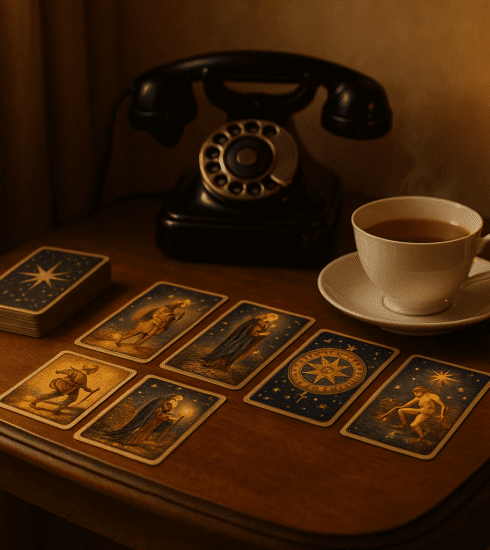
- Tarot follows a set structure of 78 cards.
- Oracle cards can vary in number, theme and style.
Tarot usually has a more established symbolic system, while oracle decks are often more free-form. Neither is better; they simply offer different experiences. Tarot tends to appeal to people who like pattern, tradition and structure, while oracle cards may feel more open and intuitive.
Do You Need Psychic Powers to Read Tarot?
No. You do not need to call yourself psychic to read tarot. Some readers rely more on intuition, others on study, and many use a combination of both. A good tarot reading often comes from paying attention to the cards, the question and the emotional context.
If you are starting out, begin with the card imagery, the keywords and your own response to the card. Often the first impression is worth listening to before you over-edit yourself into confusion.
Common Misconceptions About Tarot
- “Tarot always predicts the future.” Not necessarily. Many readings focus on insight, patterns and possibilities.
- “You must be psychic to use tarot.” No. Many people learn tarot through study and practice.
- “Tarot is only for spiritual people.” Not true. Some use it for reflection, creativity or decision-making.
- “One card has one fixed meaning.” Tarot is more nuanced than that.
How to Start Learning Tarot
If you want to begin, keep it simple. Choose a deck that feels visually inviting, learn the structure of the cards, and practice with one-card or three-card spreads. Ask gentle questions such as: What do I need to notice today? or What is most important in this situation?
Write down your impressions. Over time, you will notice patterns in the cards that mean something specific to you. That personal layer is part of the magic, even when you are keeping both feet firmly on the carpet.
For a deeper understanding of tarot meanings, it can also help to explore the Major Arcana, the suits of the Minor Arcana and the difference between tarot and oracle cards.
Final Thoughts
So, what is tarot? It is a symbolic card system used for insight, reflection and intuitive guidance. For some, it is a spiritual practice. For others, it is a thoughtful way to approach life’s questions with more awareness. Either way, tarot offers a structured space to pause, reflect and listen more carefully.
If you are new to it, start gently. The cards do not need to be theatrical to be meaningful.
Need a more personal answer? For guidance shaped around your own question, you can speak with one of Philip Garcia’s trusted psychic readers. Click on this link or call 0203 472 4377.
Psychic and astrological content is provided for entertainment and personal insight. It should not replace professional medical, legal, financial or mental health advice.
Frequently Asked Questions
What is tarot in simple terms?
Tarot is a deck of 78 symbolic cards used for readings, reflection and guidance.
How many cards are in a tarot deck?
A standard tarot deck has 78 cards: 22 Major Arcana and 56 Minor Arcana.
Do you need psychic powers to read tarot?
No. Many people learn tarot through study, practice and intuition rather than psychic ability.
What is the difference between tarot and oracle cards?
Tarot has a fixed structure of 78 cards, while oracle decks vary in size, theme and system.
Is tarot just fortune-telling?
Not always. Many people use tarot for self-reflection, insight and exploring possibilities rather than fixed predictions.
For guidance shaped around your own question, you can speak with one of Philip Garcia’s trusted psychic readers. Click on this link or call 0203 472 4377
Psychic and astrological content is provided for entertainment and personal insight. It should not replace professional medical, legal, financial or mental health advice.