



What Is an Aura? A Clear Guide to Aura Meaning, Colours and Belief
What Is an Aura? A Clear Guide to Aura Meaning, Colours and Belief
If you have ever heard someone say they can “read” your aura, or that you have a bright, calm or scattered aura, you may have wondered what on earth they mean. In simple terms, what is an aura? It is usually described as a subtle energy field around a person, most often in spiritual traditions rather than in established science.
Some people believe an aura can reflect mood, personality, stress, emotional state or spiritual wellbeing. Others see it as a symbolic way of noticing what someone feels like to be around. Either way, the idea has endured for a reason: humans are rather good at sensing atmosphere, even when we cannot quite explain how.
Quick answer: An aura is commonly understood as an invisible or faintly seen energy field surrounding a person. In spiritual beliefs, different aura colours are said to carry different meanings. Scientifically, however, there is no strong evidence that auras can be objectively measured as a physical field in the way we measure light or magnetism.
What Is an Aura?
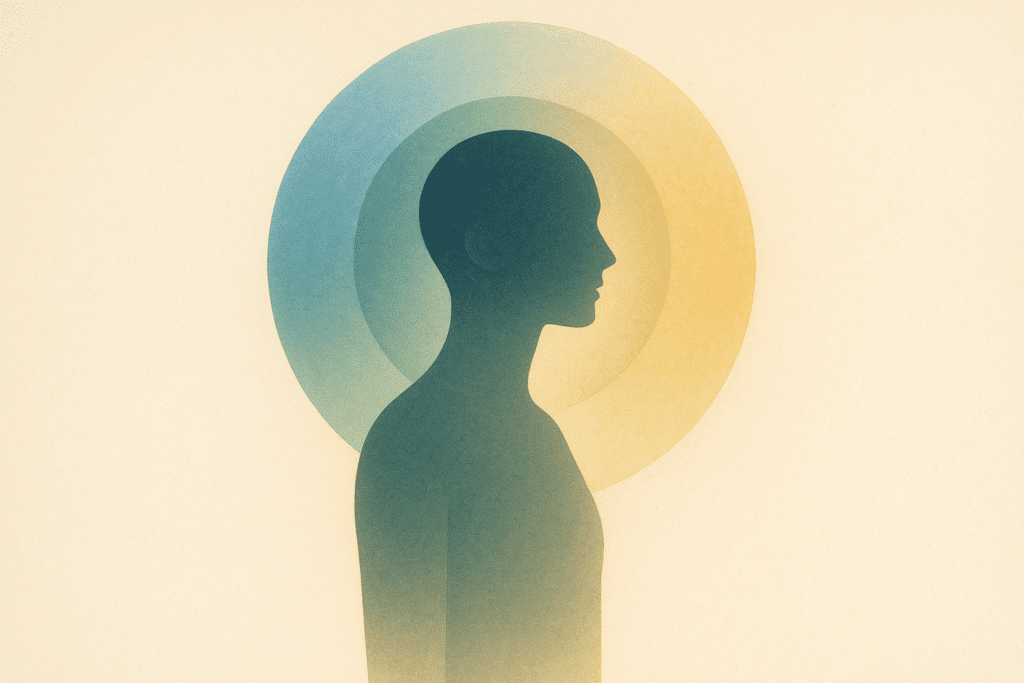
The phrase aura meaning is often used in two different ways. In everyday language, someone may have a “calm aura” or “mysterious aura” simply because of the impression they give. In spiritual language, an aura is thought to be an energy field connected with the body, mind and emotions.
This is why the aura definition can sound a little slippery. It is not a fixed scientific term with one universal meaning. Instead, it sits between symbolism, spirituality and personal interpretation. That does not make it meaningless. It simply means different communities use the word in different ways.
Where Does the Idea of Auras Come From?
Ideas about the human aura appear in a range of spiritual and esoteric traditions. You may also hear related language in discussions of energy healing, meditation, chakras and psychic reading. Across these traditions, the aura is often treated as part of a person’s subtle body or spiritual presence.
Over time, modern spiritual circles have linked auras to colour symbolism. That is where phrases like aura colours meaning and spiritual aura come in. People may say a certain colour suggests serenity, confidence, creativity or emotional sensitivity. These interpretations are not standardised, though, and can vary from one system to another.
What Do Aura Colours Mean?
Aura colours are one of the most searched parts of the topic, but they are also the easiest place to get muddled. There is no single official chart that everyone agrees on. Still, many spiritual readers use colour as a symbolic language.
- Blue is often associated with calm, communication or emotional honesty.
- Green is commonly linked with growth, healing and balance.
- Yellow may suggest optimism, intelligence or a lively mind.
- Red is often read as passion, drive or strong physical energy.
- Purple may be connected with intuition, spirituality or insight.
- White is sometimes seen as clarity, openness or a sense of purity.
These are symbolic interpretations, not scientific facts. If you are trying to understand your own aura, treat colour meanings as a reflective tool rather than a verdict. A busy week, a difficult conversation or a good night’s sleep may influence how you feel, and spiritual readers may interpret that in colour terms.
Can You Really See an Aura?
Some people say they can see auras directly. Others notice them in photographs, meditation, or simply as a strong impression around another person. In practice, many aura experiences are subjective. That means they depend on the person perceiving them.
Sometimes what people describe as seeing an aura may be linked to light, sensitivity, focus, expectation or imagination. That does not automatically make the experience unimportant. It simply means it should be approached with curiosity and a grounded mind.
If someone offers you an aura reading, it is wise to remember that it is an interpretive practice, not an objective test. A good reader should speak in possibilities, not absolutes.
Is There Scientific Evidence for Auras?
This is the practical question, and an honest one. At present, there is no strong scientific evidence that human auras exist as a measurable energy field in the way spiritual traditions describe them. Science does recognise that the body produces electrical activity, heat and other measurable phenomena, but that is not the same as proving a spiritual aura.
So if you are asking about aura science, the balanced answer is this: the concept of a human aura belongs mainly to spirituality, symbolism and personal belief. It can be meaningful without being scientifically established.
Aura vs Energy: What Is the Difference?
People often use the words aura and energy as though they mean the same thing, but they are not quite identical. “Energy” can refer to mood, vitality, emotional presence or spiritual force. An aura is usually the imagined or sensed field around that energy.
For example, you might say someone has a cheerful energy and a bright aura. In everyday conversation, that usually means they feel uplifting to be around. In spiritual language, the aura is the outer expression of that presence.
How to Think About Auras Without Getting Lost in Them
Auras are best approached with a light but respectful touch. They can be a useful way to reflect on mood, intuition and the atmosphere between people. They are less useful when treated as hard evidence about a person’s worth or destiny.
If you are curious, you might simply notice how different people feel in your company. Do they seem grounding, energising, soothing or intense? You do not need to see colours to learn something real about human presence. Sometimes intuition notices first and language catches up later.
Final Takeaway
So, what is an aura? In simple terms, it is usually described as a subtle energy field around a person, especially within spiritual belief systems. Aura colours are interpreted symbolically, not universally, and there is no strong scientific proof that auras can be measured objectively. Still, the idea remains popular because it gives people a language for sensing mood, presence and intuition.
If you are exploring auras for the first time, keep your feet on the ground and your curiosity open. That tends to be a sensible combination, mystically speaking.
Need a more personal answer? For guidance shaped around your own question, you can speak with one of Philip Garcia’s trusted psychic readers. Click on this link or call 0203 472 4377
Psychic and astrological content is provided for entertainment and personal insight. It should not replace professional medical, legal, financial or mental health advice.
Frequently Asked Questions
What is an aura in simple words?
An aura is usually described as an energy field around a person. In spiritual traditions, it is thought to reflect mood, character or wellbeing.
Are aura colours real?
Aura colours are part of spiritual interpretation rather than proven science. Different traditions assign different meanings, so there is no universal colour code.
Is an aura the same as energy?
Not exactly. Energy can refer to mood, vitality or spiritual presence, while an aura is usually described as the field surrounding that presence.
Can everyone see auras?
No. Some people say they can see or sense auras, but these experiences are subjective and vary from person to person.
Is there scientific evidence for auras?
There is no strong scientific evidence that auras exist as a measurable physical field. The idea is mainly spiritual and symbolic.
For guidance shaped around your own question, you can speak with one of Philip Garcia’s trusted psychic readers. Click on this link or call 0203 472 4377
Psychic and astrological content is provided for entertainment and personal insight. It should not replace professional medical, legal, financial or mental health advice.


